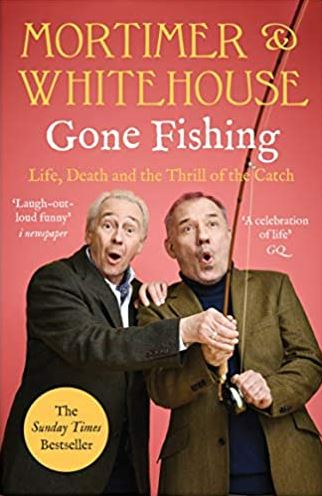
(First published 2019, this edition published 2020 by Blink)
First things first, I’m not into fishing. However, I am very much into Gone Fishing, the BBC series (and now book) made by Bob Mortimer and Paul Whitehouse. Both men have experienced issues with their hearts in recent years, with Whitehouse receiving a stent and Mortimer undergoing a heart bypass. If it hadn’t been for the cardiological experiences the two comics shared, the fishing (and therefore the show) might never have happened.
Here’s how Bob describes the post-bypass importance of Paul’s friendship, as well as hinting at the differing dynamics and value of friends versus family:
Now, if it had been left up to me, I would have been in danger. I love telly: I would have sat there for three years. My wife would have tolerated me. You’ve had a big operation, and I could show the scar and say, in a sad little voice, ‘I’m not very well, love…’
[…] I could pretend I was living.
But Paul wanted me to actually live. As soon as I came out of the hospital, he started chivvying me along. He said, ‘As soon as you’re on your feet, you’re going fishing; it’ll be really good for you,’ because he knew. ‘You’re not going to just sit there; no, you’re coming out, you’re coming out.’
[…]
And that’s when we went fishing.
Bob Mortimer, Gone Fishing, pp.46-7
I’m trying to avoid making sweeping generalisations on the basis of gender (cue sweeping generalisations on the basis of gender) but the conception that males are less likely to talk to friends about their emotions or problems is one backed by research. A 2019 study by mental-health charity Mind discovered that only 34% of males (compared to 52% of females) said they would be likely to talk to friends about their problems if they were feeling worried or low for more than two weeks. Mind also found that male friendships were more likely to be based on a shared hobby or activity.
Fishing, the shared hobby exemplified by Mortimer and Whitehouse, has the added benefits of incorporating gentle physical activity, time spent outdoors and in nature, and periods of quiet alongside opportunities for conversation – all of which the two men describe benefitting from throughout the book. By talking openly, honestly, and with humour about their hopes and fears related to their hearts and mortality, Mortimer and Whitehouse model one possible type of (male) friendship and demonstrate the physical and mental health benefits of opening up and getting out.
Have you watched Gone Fishing or read/listened to the book? What did you take from it? Do you have a friend who has supported you through your cardiological trials and tribulations? Do they have experience of living with a heart condition too? Does that make a difference?
As usual, so many questions and so few answers! Sorry. If this prompts you to think about the dynamics and importance of families and friendship, maybe you would consider writing a haiku on the topic for this month’s collaborative zine? Full details here.
 hearty tales